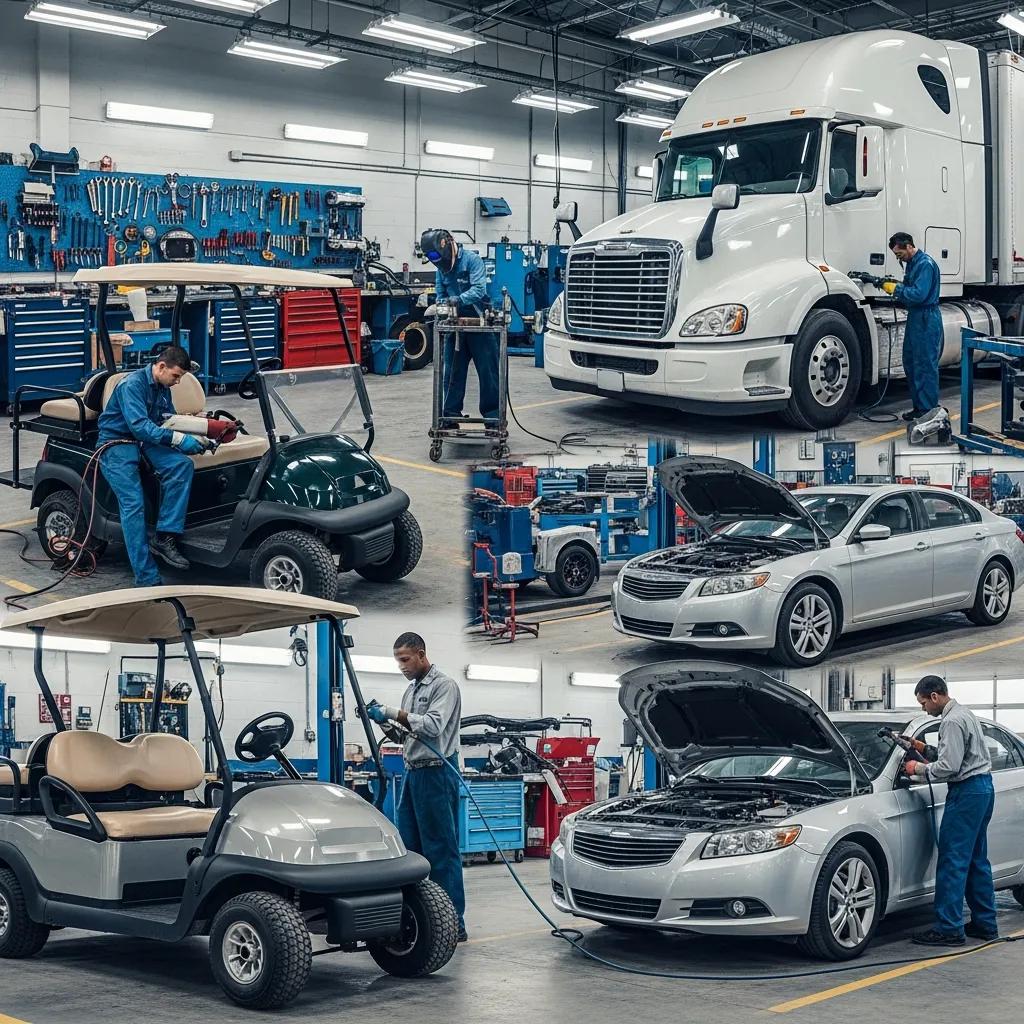
Comprehensive Auto Body Repair for All Vehicle Sizes: Expert Services from Golf Carts to Semi-Trucks
Auto body repair is essential for maintaining the safety and functionality of vehicles, regardless of their size. From golf carts to semi-trucks, the need for specialized repair services is paramount in ensuring that all vehicles remain roadworthy. This article will explore the various auto body repair services available for different vehicle sizes, focusing on the unique needs of each category. Readers will learn about the specialized services offered by commercial truck body shops, the unique requirements for golf cart repairs, and the key processes involved in large vehicle collision repair. Additionally, we will discuss how to find a reliable auto body shop that meets diverse vehicle needs.
What Specialized Services Does a Commercial Truck Body Shop Offer?
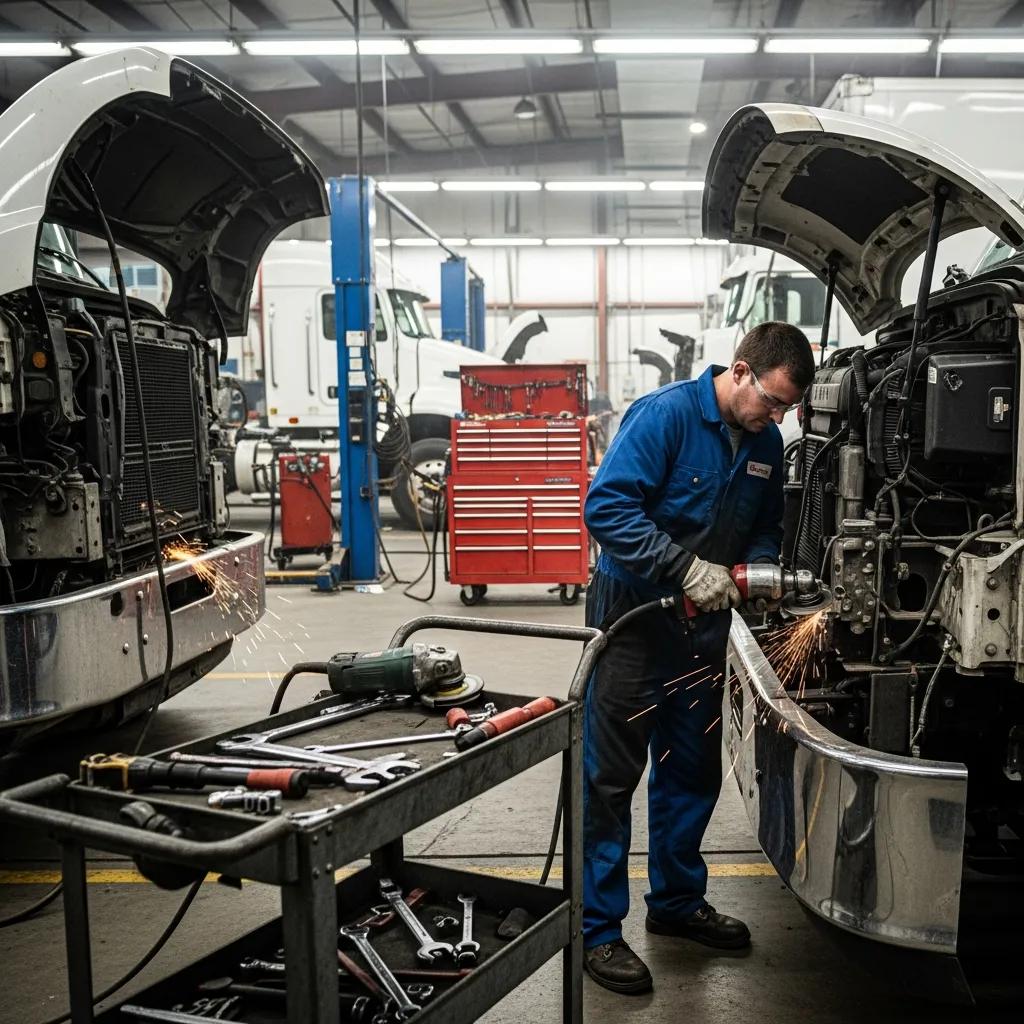
A commercial truck body shop, such as Lyle’s Collision, offers specialized services including:
- Collision Repair: Restoring vehicles to their pre-accident condition.
- Custom Paint Jobs: Revitalizing the fleet’s appearance.
- Dent Removal: Addressing minor damages.
- Frame Straightening: Repairing structural damage.
- Windshield Replacement: Replacing damaged windshields.
- Parts Replacement: Replacing damaged or worn parts.
- Insurance Claims Assistance: Helping manage the claims process.
- Bulk Pricing: Offering competitive pricing for large fleets.
- Routine Maintenance: Conducting inspections and minor repairs.
These services are tailored to minimize downtime and ensure efficient operation for fleet vehicles.
How Is Semi-Truck Collision Repair Performed Efficiently?
Semi-truck collision repair is performed efficiently through a structured process that includes several key steps:
- Assessment and Documentation: Technicians assess visible and hidden damage using visual inspections and diagnostic tools.
- Estimate Generation: An estimate is created, and insurance authorization is secured.
- Disassembly: The vehicle is disassembled to identify any structural or electronic issues.
- Structural and Body Repairs: Necessary repairs or panel replacements are performed.
- Refinishing: Surface preparation and paint refinishing are done, ensuring color matching.
- Reassembly and Calibration: The vehicle is reassembled, and any advanced driver-assistance systems (ADAS) are calibrated.
- Quality Control: A multi-tier quality control process is conducted, including test drives and detailing before delivery.
This procedural approach helps ensure safety, quality, and efficiency, minimizing downtime and costs for fleet vehicles.
What Are the Benefits of Fleet Vehicle Dent Removal and Maintenance?
The benefits of fleet vehicle dent removal and maintenance include:
- Reduced Downtime: Efficient repair processes minimize the time vehicles are out of service, allowing fleets to return to operation quickly.
- Cost Savings: Bulk pricing options can lead to significant savings for businesses with large fleets.
- Improved Vehicle Longevity: Regular maintenance and repairs help ensure that vehicles remain operational for a longer period.
- Enhanced Professional Appearance: Custom paint and cosmetic repairs can revitalize a fleet’s appearance, maintaining a professional image on the road.
- Insurance Claims Assistance: Support with navigating insurance claims can streamline the repair process and alleviate stress for fleet managers.
How Do Golf Cart Body Repair Services Address Unique Vehicle Needs?
Golf cart body repair services address unique vehicle needs by offering specialized auto body repair solutions tailored specifically for golf carts. These services include collision repair, custom paint jobs, dent removal, and frame straightening, ensuring that any damage is addressed promptly and professionally. Lyle’s Collision prioritizes minimizing downtime, utilizing advanced techniques and equipment to expedite repairs, and providing flexible scheduling options. Additionally, they offer assistance with insurance claims to streamline the repair process for fleet managers.
What Are Common Golf Cart Body Panel Replacement Techniques?
Common golf cart body panel replacement techniques include:
- Panel Removal: Carefully detaching damaged panels to assess underlying structures.
- Replacement Sourcing: Identifying and sourcing OEM or aftermarket panels that match the original specifications.
- Installation: Securing new panels using appropriate fasteners and adhesives to ensure durability.
These techniques ensure that golf carts are restored to their original condition, maintaining both functionality and aesthetics.
How Are Custom Golf Cart Paint Jobs Designed and Applied?
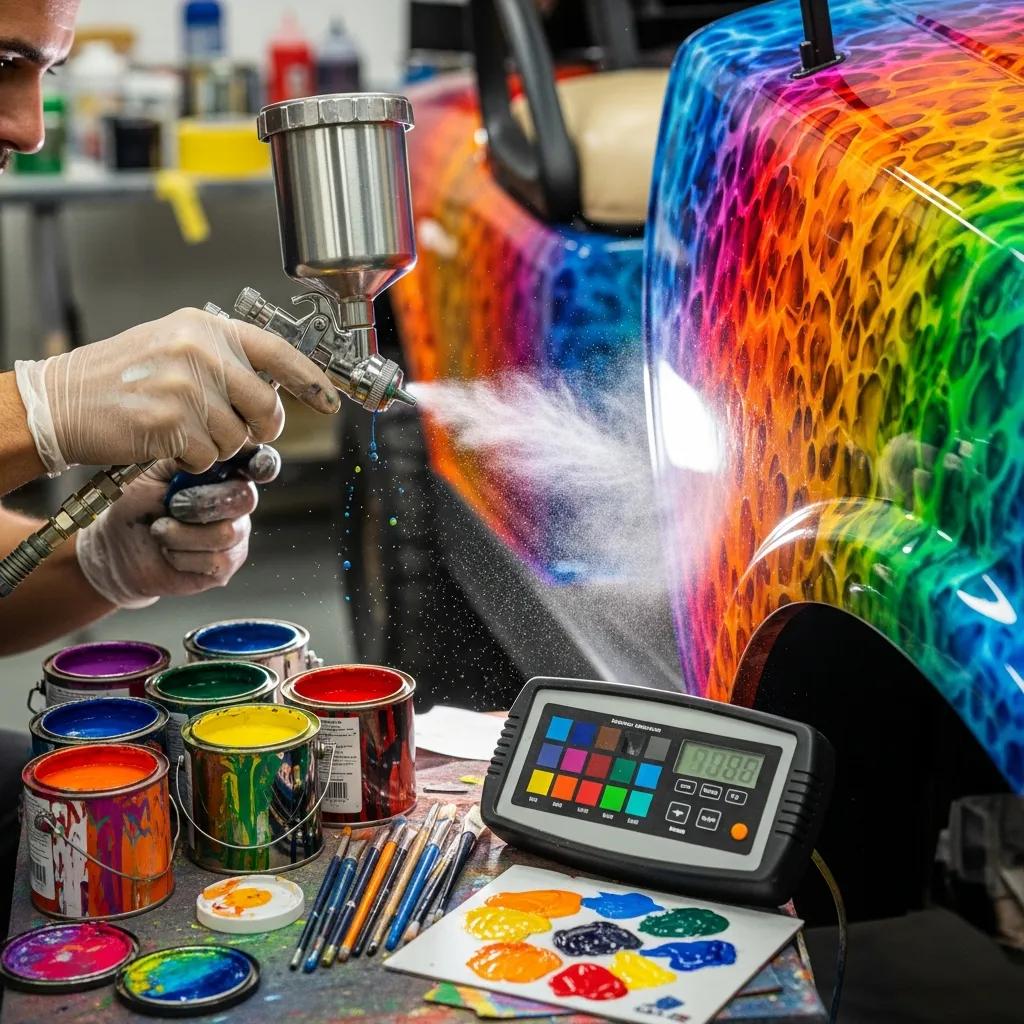
Custom golf cart paint jobs are designed through a process that involves precise color matching using paint formula databases, spectrophotometers, and visual blending panels. This ensures that the desired color and effect pigments are accurately recreated. The application process includes several steps:
- Primer Application: Prepares and levels the substrate, providing corrosion protection and adhesion.
- Basecoat Application: Adds color and effect.
- Clearcoat Application: Provides gloss and environmental protection.
Each layer requires specific flash and cure times to ensure durability and a high-gloss finish. Proper curing methods, such as ambient cure or forced-air ovens, are essential to achieve a hard, bonded finish and to avoid defects. The entire process is controlled to ensure visual continuity and durability, with technicians often blending into adjoining panels for a seamless look. Documentation of the paint formula and process is maintained for future repairs.
What Are the Key Processes in Large Vehicle Collision Repair?
The key processes in large vehicle collision repair include:
- Assessment and Documentation: Identifying visible and hidden damage.
- Estimate Generation: Coordinating with insurers for approval.
- Disassembly: Identifying structural or electronic issues.
- Structural/Frame Repair: Performing necessary repairs or panel replacements.
- Surface Preparation: Conducting paint refinishing with color matching.
- Reassembly: Calibrating ADAS and performing electronic diagnostics.
- Quality Control: Conducting test drives, detailing, and final delivery.
These processes ensure that large vehicles are restored to safe operating conditions.
How Does Paintless Dent Repair Work for Heavy-Duty Vehicles?
Paintless Dent Repair (PDR) for heavy-duty vehicles works by reshaping the metal from behind the panel without the need for repainting. This method preserves the factory paint and is generally faster and more cost-effective compared to traditional repair methods, which involve panel beating, fillers, and repainting, especially when the paint is compromised or the damage is severe. PDR requires access to the backside of the panel and controlled manipulation to restore its shape, making it suitable for minor dents and cosmetic damage on heavy-duty vehicles.
What Is Frame Straightening and Why Is It Critical for Commercial Trucks?
Frame straightening is a repair technique used to correct major frame rail misalignment resulting from moderate-to-severe crashes. It is critical for commercial trucks because it restores the vehicle’s original equipment manufacturer (OEM) geometry, ensuring that safety systems function correctly and the vehicle behaves predictably in future collisions. The process involves using anchored pull systems and computerized measuring to bring the vehicle’s rails back to manufacturer tolerances, which is essential for maintaining crashworthiness and proper airbag deployment.
The importance of proper frame repair for trucks has been a long-standing consideration in the automotive industry.
Truck Frame Repairability & Collision Trends
ABSTRACT: The increase in truck or full frame vehicles in the market has led to unfavorable collision loss experience trends, due in part to the lack of adequate frame repair options. Prior to the incorporation of passive restraints in light duty trucks and sport utility vehicles, frame repair was considered by the vehicle manufacturers and the insurance industry to be a generally accepted practice.
Design Guidelines for Truck Frame Repairability: Benefits and Necessity, 2003
How Can Customers Find a Reliable Auto Body Shop Near Me for Various Vehicle Sizes?
Customers can find a reliable auto body shop by following these steps:
- Understand Your Rights: Know that you have the right to choose your repair facility and receive a written estimate before any work begins.
- Use a Structured Claims Checklist: Follow a checklist for navigating insurance claims, which includes documenting damage and maintaining communication with your insurer.
- Evaluate Shops: Use objective criteria such as certifications, online reputation, and customer reviews to assess potential shops.
- Ask Questions: Inquire about the repair process, timeline, and any changes to the initial estimate to ensure transparency.
- Utilize Digital Tools: Look for shops that offer digital tools like online repair tracking and photo progress portals for better communication.
- Seek Recommendations: Consider local search optimization and reputation marketing services to find trusted shops in your area.
By following these guidelines, customers can make informed decisions and select a reputable auto body shop that meets their needs for various vehicle sizes.
What Should You Look for in a Local Auto Body Repair Shop?
When looking for a local auto body repair shop, consider the following:
- Your Rights: Understand that you have the right to choose your repair facility, be informed about the repair process, and receive a written estimate before any work begins.
- Transparency: Ensure the shop provides transparency regarding the parts used in repairs. They must inform you in writing if non-OEM parts are to be used.
- Assessment and Estimate: The shop should conduct a thorough assessment of your vehicle’s damage and provide a detailed written estimate outlining necessary repairs, parts needed, and estimated costs.
- Communication: Maintain open communication with the repair shop. Ask questions about the timeline, specific repairs, and any changes to the initial estimate.
- Qualifications: Select a qualified collision repair facility to ensure the safety and quality of your vehicle’s repairs.
What Are the Typical Costs and Timelines for Auto Body Repairs Across Vehicle Types?
The typical costs and timelines for auto body repairs across vehicle types can vary significantly based on the extent of damage and the type of vehicle. For instance, semi-truck body repairs often involve higher costs due to the complexity and size of the vehicle, while golf cart repairs may be more straightforward and less expensive.
How Much Does Semi-Truck Body Repair Usually Cost?
The cost of semi-truck body repair can range widely depending on the damage severity, with estimates typically starting around $3,500 for minor repairs and escalating to $10,000 or more for extensive collision damage. Factors influencing costs include parts replacement, labor rates, and the need for specialized equipment.
What Is the Expected Repair Duration for Golf Cart Bodywork?
The expected repair duration for golf cart bodywork can vary based on the type of repair needed. Minor repairs may take a few hours, while more extensive work, such as body panel replacement or custom paint jobs, could take several days. Factors affecting duration include parts availability and the complexity of the repairs.